Chatbots and User Acquisition: Generating New Leads and Customers for Your Website

Understanding the Chatbot Revolution in Lead Generation
The chatbot revolution is reshaping the way businesses approach lead generation, enabling them to engage potential customers like never before. With their ability to operate 24/7, chatbots serve as the first line of communication, offering instant responses to inquiries that would otherwise go unanswered. This immediacy not only enhances user experience but also significantly increases the chances of converting leads into paying customers. By leveraging natural language processing and AI-driven insights, these digital assistants can personalize interactions, ensuring that users feel valued and understood right from their initial engagement.
Incorporating chatbots into your lead generation strategy brings an array of benefits that can elevate your marketing efforts. Consider the following advantages:
- Increased Efficiency: Automate responses and gather essential lead information without the need for human intervention.
- Data Collection: Capture valuable user data to inform your marketing strategies and enhance targeting.
- Seamless Integration: Easily integrate chatbots into existing websites and platforms, making deployment straightforward.
- Cost-Effective: Reduce overhead costs associated with traditional customer service.
To illustrate this transformation further, here’s a quick overview of potential lead generation outcomes with and without chatbots:
| Aspect | With Chatbots | Without Chatbots |
|---|---|---|
| Response Time | Instant | Delayed |
| Lead Qualification | Automated | Manual |
| User Engagement | Enhanced Interaction | Passive |
Crafting Engaging Conversations: Tips for Captivating Users
To create truly engaging conversations through chatbots, it’s vital to prioritize user experience. Start by personalizing interactions—use the user’s name whenever possible and tailor responses based on their behaviors or previous interactions. This can build rapport and make users feel valued. Additionally, implementing a friendly tone is crucial; avoid overly formal language and instead embrace a conversational style that encourages users to interact without hesitation. Here are some key strategies:
- Open-ended questions: Encourage users to share more about their needs.
- Interactive elements: Incorporate buttons and quick replies to streamline conversations.
- Voice and personality: Create a distinct personality for your chatbot that reflects your brand.
Furthermore, understanding and analyzing user intent can significantly enhance engagement. Make use of natural language understanding (NLU) to decode user inquiries and provide insightful responses. Leveraging analytics tools will help you track interactions and adjust your conversational strategies accordingly. A well-rounded approach should also include the following:
| Focus Area | Desired Outcome |
|---|---|
| Personalization | Build rapport with users |
| User Intent Analysis | Improve response accuracy |
| Interactive Responses | Enhance user engagement |
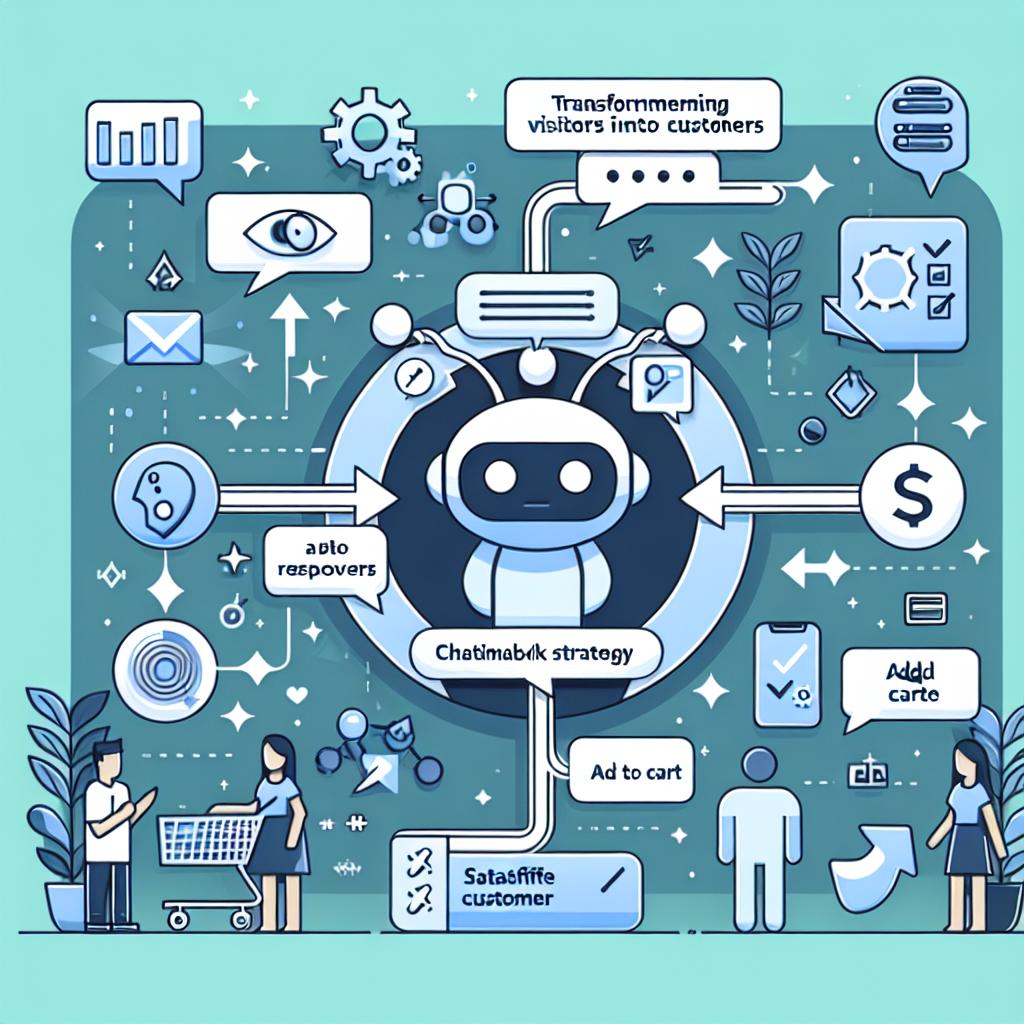
Transforming Visitors into Customers: Optimizing Your Chatbot Strategy
To effectively convert visitors into customers, personalization is key. A well-optimized chatbot can analyze user behavior and preferences in real time, allowing it to tailor recommendations and responses that resonate with each individual. Here are some tactics to enhance the effectiveness of your chatbot:
- Segment your audience based on demographics and browsing behavior.
- Implement dynamic responses that change based on previous interactions.
- Use engaging language that reflects your brand's personality.
- Offer exclusive deals or discounts directly through the chat interface to entice conversions.
Additionally, seamless integration with your existing sales and CRM systems is vital. This ensures that every interaction is logged, monitored, and utilized to inform future strategies. Consider the following aspects to boost the efficiency of your chatbot:
| Integration Aspect | Benefits |
|---|---|
| CRM Integration | Centralizes customer data for better targeting. |
| Analytic Tools | Tracks performance and visitor engagement metrics. |
| Email Marketing | Follows up on leads captured via the chatbot. |

Measuring Success: Key Metrics to Track for Continuous Improvement
To truly gauge the performance of your chatbot in driving user acquisition, it's essential to focus on a variety of key metrics. Start with User Engagement rates, which can reveal how effectively your chatbot captures attention and encourages interaction. Track the Number of Conversations Initiated as well; higher numbers indicate a successful engagement strategy. Additionally, measuring Average Conversation Duration can provide insights into the quality of the interactions; longer conversations usually signify that users are finding value in the interaction.
Your goal is to not only attract users but to convert them into customers. Monitor the Conversion Rate, which shows the percentage of chatbot interactions that lead to a desired action, such as signing up for a newsletter or making a purchase. You might also want to analyze the Drop-off Rate during conversations to identify points where users lose interest. A Feedback Loop mechanism, where users can share their experience post-interaction, can help to continuously refine your chatbot’s performance. By paying attention to these metrics, you can create a cycle of continuous improvement that maximizes lead generation and customer retention.


Comments
Post a Comment